The relief lasts about a day. You agreed on the name, you both meant it, and then somewhere in the quiet afterwards comes the thought: we are going to have to do that for everything.
Sleep. Childcare. Whose parents at Christmas. Screens. Schools. All of it decided by the same two people who took four months to agree on one word.
The good news is that you have just finished a full-scale rehearsal, and it is worth taking the method off it before you forget how you did it.
The name was the first joint decision
Not the first decision you have made together — but the first one about this child, with no way to split the difference and no option to each do your own thing.
You cannot have half a name. You cannot alternate. You cannot try it for a month and review. It is one outcome, permanent, and both of you have to live inside it.
Almost every parenting decision that follows has that same shape. Which is why the name is a much better template than it looks.
What made agreeing on a name work
Look back at what you actually did, because there was a method in it even if nobody named it at the time:
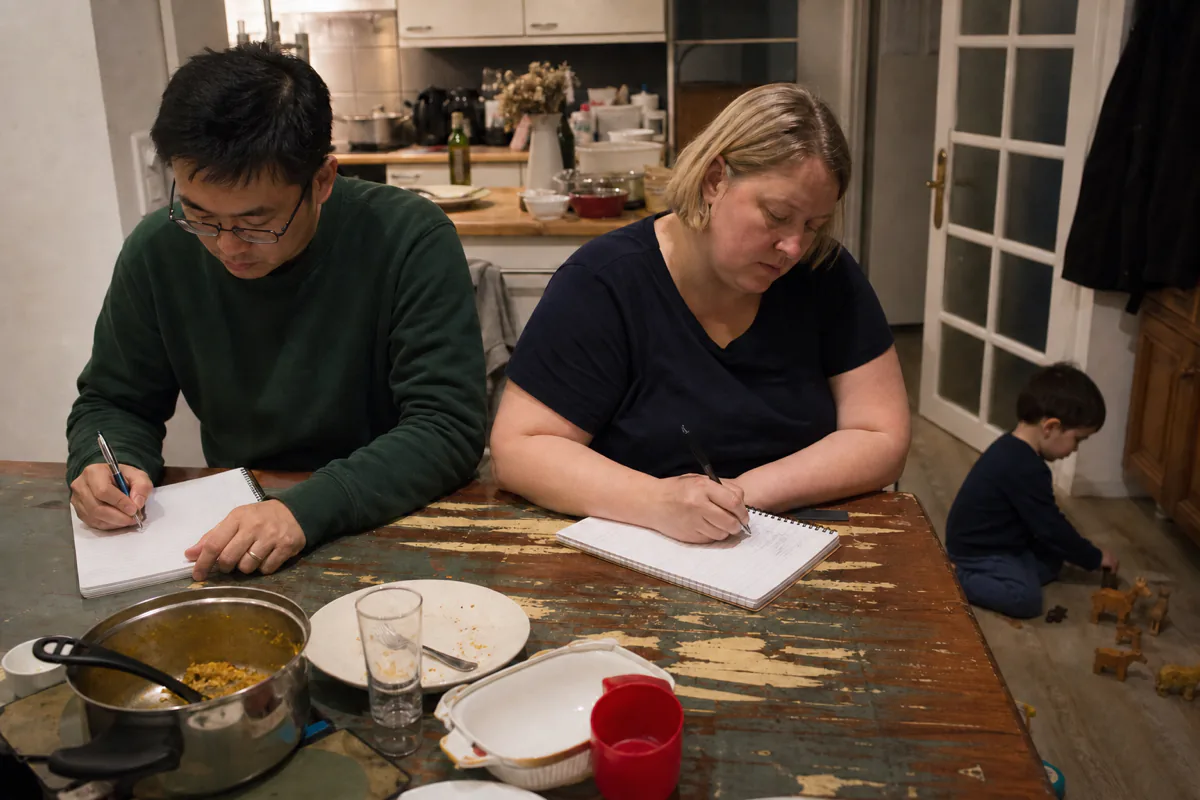
- **Separate lists first.** You each said what you wanted before hearing the other, so neither list was a reaction to the other one.
- **A veto with no appeal.** Either of you could kill a name and did not have to justify it. That is what made it safe to put things on the list at all.
- **No forcing.** Neither of you could win by outlasting the other, so agreement meant agreement.
- **A deadline that was not yours.** The registration date settled it. Not a person — a date.
That is a decision procedure. It is a good one, and it works on things that are not names.
Why shared decisions matter more once there is a baby
The research here is fairly stark and worth knowing.
Shapiro, Gottman and Carrère, in the Journal of Family Psychology in 2000, tracked newlywed couples through the arrival of a first baby. Sixty-seven percent reported a decline in marital satisfaction over the first three years. Thirty-three percent stayed stable or improved.
Chong and Mickelson, writing in the Journal of Family Issues in 2016, found that what predicted satisfaction through that transition was **perceived fairness** — whether each person felt the arrangement was reasonable — rather than the actual division of the work.
Put those together and the practical reading is that how you decide has more effect than what you decide. A rota that one person feels was imposed does more damage than a worse rota that both of you built.
Porting the method
It transfers almost unchanged. Take the next contested decision — say, childcare — and run it as a name:
Each of you writes what you want without consulting the other. Compare. Anything either of you vetoes is out, no justification required. Neither of you may win by attrition. Set an external deadline so the decision has an end.
It feels over-formal the first time and then it stops feeling like anything. What it actually does is prevent the two failure modes — one person quietly conceding, and the decision being made by whoever holds out longest.
How you decide matters more than what you decide. That is the finding, and it survives most of the specifics.
The one thing it does not do
It does not stop you disagreeing, and it is not meant to. Two people raising a child are going to want different things regularly for the next two decades.
What it does is make disagreement survivable, by making sure that neither of you ends up carrying a decision you never agreed to. That is the whole of it — and you already know how, because you did it once, over a name, before any of it mattered as much as it does now.